How a 12x18x4 Filter Handles Holiday Cooking Smells and Extra Dust From Guests
The holidays are the single hardest week of the year for your air filter — and most homeowners don't realize it until the system struggles. We've manufactured filters for over a decade, and the data we see from high-usage seasonal periods is consistent: cooking byproducts, guest foot traffic, and rooms reopened after months of low use create a combined particulate spike that a thin one-inch filter simply isn't equipped to absorb.
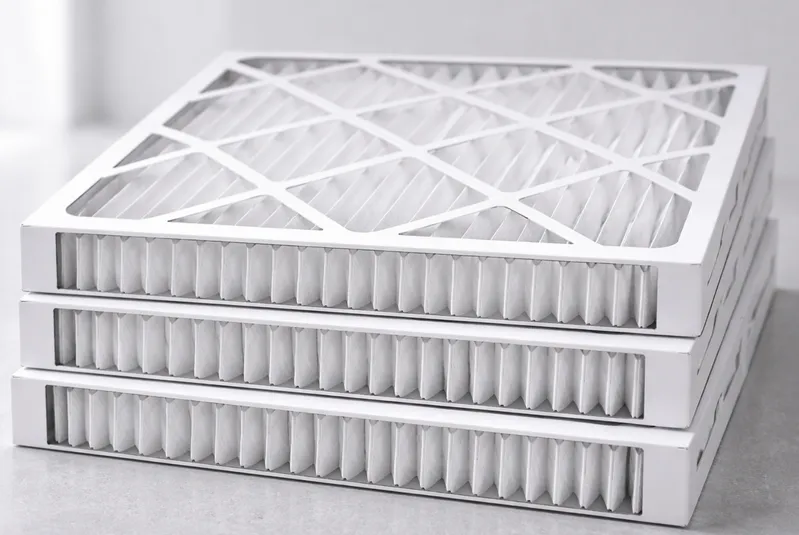
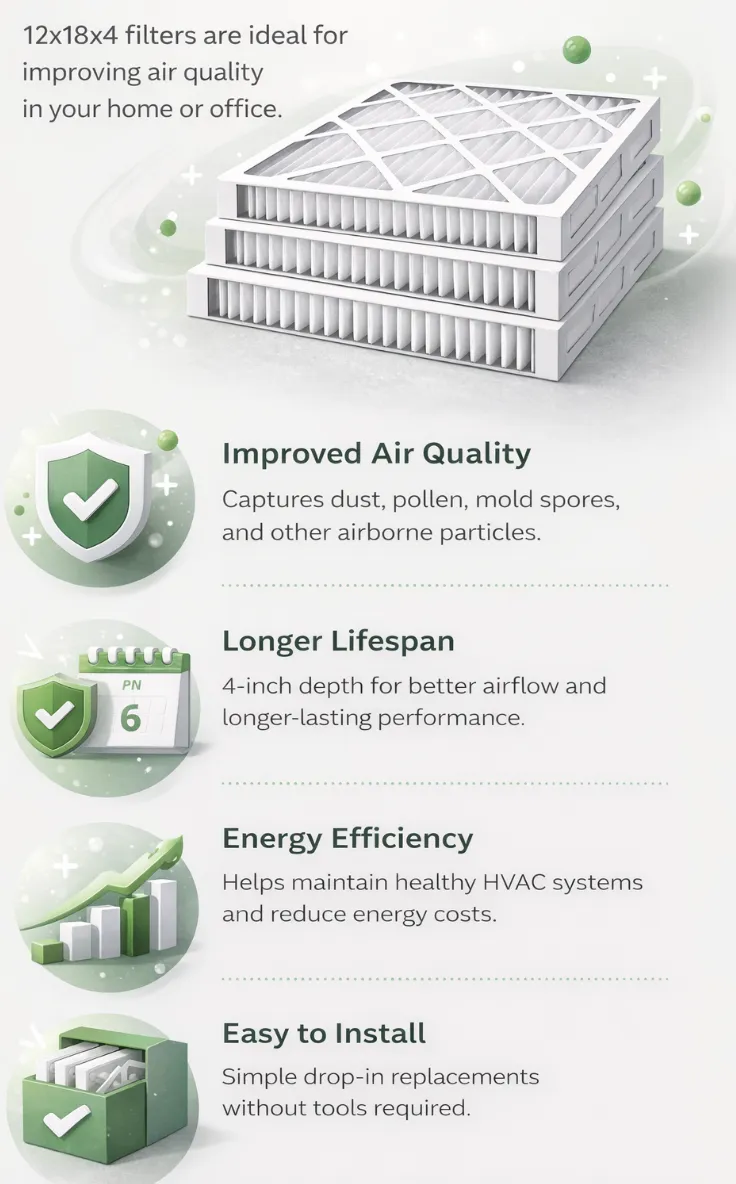
A 12x18x4 changes that equation. The four-inch media bed captures the grease particles, fine dust, and odor-carrying molecules that a shallow filter passes right through — keeping your system from working overtime while your oven does the same. Here's exactly what that means for your home this holiday season.
Quick Answers
How a 12x18x4 Filter Handles Holiday Cooking Smells and Extra Dust From Guests
A 12x18x4 air filter handles holiday cooking smells and extra dust from guests by using its four-inch media depth to capture significantly more airborne particles than a standard one-inch filter before performance degrades. Here is how it works:
Cooking smells — The four-inch media bed intercepts the grease particles and combustion byproducts that carry odors through your ductwork before they recirculate into living spaces.
Extra dust from guests — The expanded media volume absorbs the combined particulate load from foot traffic, reopened guest rooms, and increased occupancy without restricting airflow.
Sustained performance — A 12x18x4 maintains filtration efficiency across the full holiday period where a one-inch filter at the same MERV rating loads up and degrades within days.
Recommended MERV rating — MERV 11 for most households, MERV 13 for homes with allergy sufferers, pets, or heavy multi-day cooking.
Best results — Install a fresh 12x18x4 one to two weeks before the first holiday gathering and inspect again five to seven days after the last one.
The bottom line: filter depth and media volume — not MERV rating alone — determine how well your filter protects your home's air quality when holiday cooking and guest traffic hit at the same time.
Top Takeaways
What Every Homeowner Should Know About How a 12x18x4 Filter Handles Holiday Cooking Smells and Extra Dust From Guests
The holidays are the hardest period of the year for your air filter.
Continuous cooking, full-house occupancy, and reopened guest rooms create a combined particulate spike.
A standard one-inch filter isn't built to absorb that load — regardless of MERV rating.
Filter depth matters as much as MERV rating.
A 12x18x4 outperforms a one-inch filter at the same MERV rating under high-demand conditions.
The four-inch media bed sustains filtration efficiency across the full holiday season — not just the first few days.
Holiday cooking releases the finest, most health-relevant particles your filter faces all year.
Frying, broiling, and gas stove use generate PM2.5 particles small enough to reach deep lung tissue.
MERV 11 handles most households well.
MERV 13 is the better choice for allergy sufferers or kitchens running hard across multiple consecutive days.
Inspect before guests arrive. Inspect again within a week after they leave.
Holiday conditions accelerate filter loading well beyond a normal replacement schedule.
A clean filter in January protects your system through the coldest stretch of the heating season.
The right filter installed before the season starts is the simplest investment you can make.
After over a decade of manufacturing filters through holiday seasons, the pattern is consistent.
Proactive filter management protects both your family's air quality and your HVAC system's long-term health.
Why Holiday Air Is Harder on Your Filter Than You Think
Most air filters cruise through the year at a predictable pace. Then the holidays arrive. In the span of a few days, your HVAC system faces a combination of stressors it rarely sees at any other time — continuous cooking, increased occupancy, and disrupted settled dust from guest rooms and common areas that have sat quiet for months. Each of these individually adds load to your filter. Together, they can cut its effective lifespan nearly in half compared to a normal week. Understanding everything you need to know about HEPA filters and air purifiers can help you prepare for these spikes.
What Cooking Does to Your Indoor Air
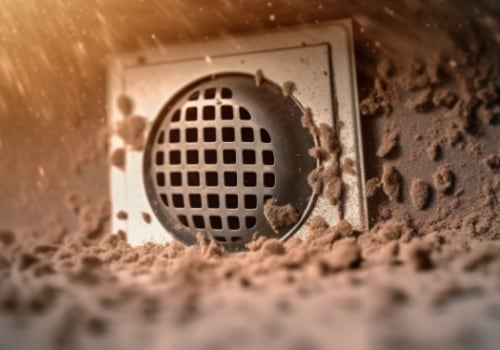
Every hour your oven or stovetop runs, it releases a stream of ultrafine grease particles, combustion byproducts, and volatile organic compounds into your home's air supply. Roasting, frying, and even baking all contribute. These particles are small enough to travel through your return vents and embed deep in your filter media — or worse, pass straight through a filter that's already loaded. Many homeowners check eBay for replacement filters to keep up with this demand.
A 12x18x4 filter's expanded media depth gives it the capacity to intercept these particles before they coat your coils or recirculate through your living spaces. If you notice your AC won’t turn on and there’s water in the drain pan, it might be due to a severely clogged filter affecting your system's drainage.
How Extra Guests Add to the Dust Load
More people in your home means more particulate matter in your air — full stop. Guests bring in pollen, outdoor debris, and microfibers from clothing. Foot traffic stirs up settled dust in carpets and on hard floors. Rooms that have been closed off for weeks release their accumulated dust load the moment someone opens the door and the air starts moving. You can find bulk options like a Filterbuy 12x30x1 6-pack for other areas of your home to manage this.
A four-inch filter has the media volume to absorb this surge without becoming restrictive, which keeps airflow steady and your system running efficiently even with the house at capacity. It is important to know how long does it take to repair an air conditioning system if the system fails under this extra load.
Why Filter Depth Matters More Than MERV Rating Alone
Homeowners often focus exclusively on MERV rating when choosing a filter, but depth is just as critical during high-demand periods. According to Wikipedia's air filter page, the design of the media determines its capacity. A MERV 11 or MERV 13 one-inch filter will load up quickly under holiday conditions and can begin restricting airflow within days.
That same MERV rating in a 12x18x4 format holds significantly more captured material before performance degrades — meaning you get the filtration efficiency you paid for across the entire season, not just the first few days of it. You can even find specialized Filterbuy 20x25x5 filters at Home Depot that provide similar high-capacity benefits.
The Right MERV Rating for Holiday Cooking and Guest Traffic
For most homes managing a combination of cooking smells, extra dust, and normal pet or allergy concerns, a MERV 11 in the 12x18x4 size is the practical sweet spot. It captures fine particulate and odor-carrying molecules without creating the static pressure that higher-rated filters can impose on residential systems. Some users prefer the Filterbuy 24x24x1 4-pack at Target for smaller returns, but the 4-inch depth remains superior for heavy loads.
If your household includes allergy sufferers or you're running the kitchen hard across multiple consecutive days, a MERV 13 is worth considering — just confirm your system's blower can handle the added resistance before making the switch. Consult a furnace replacement cost estimator guide if you are worried about the long-term impact on your equipment.
When to Check and Change Your Filter Around the Holidays
We recommend inspecting your 12x18x4 filter before guests arrive and again within a week after the holiday period ends. If you're hosting across multiple days with heavy cooking, that post-holiday check is especially important. Using FilterBuy 20x20x1 filters from Amazon is a common quick fix, but a 4-inch deep model is preferred for holiday stressors.
A filter that looks fine under normal conditions may be significantly loaded after a week of elevated use. Catching it early protects your system's efficiency heading into the colder stretch of winter when your HVAC is running hardest. Always follow safety precautions when repairing an AC unit during your inspections.
"After manufacturing filters through more than a decade of holiday seasons, the pattern is unmistakable — homes that swap to a four-inch filter before Thanksgiving consistently report fewer odor complaints and less post-holiday system strain than those running a standard one-inch, regardless of MERV rating."
Essential Resources on How a 12x18x4 Filter Handles Holiday Cooking Smells and Extra Dust From Guests
What Every Homeowner Should Know Before the Holidays Hit Your Air Quality
What MERV Ratings Actually Mean — and Why They Matter More During the Holidays
Don't take your filter's rating for granted. The EPA's official MERV breakdown reveals exactly what particle sizes each rating captures and why upgrading matters when your home is running at full capacity with guests, cooking, and extra foot traffic driving your air quality demands higher than usual. U.S. Environmental Protection Agency — https://www.epa.gov/indoor-air-quality-iaq/what-merv-rating
The Filter Thickness and Replacement Guide Most Homeowners Never Read
After over a decade of manufacturing filters, we've seen what happens when homeowners overlook filter depth and replacement timing — especially during high-use seasons. This EPA consumer guide covers exactly what to look for when evaluating whether your current setup can handle the extra load the holidays put on your system. U.S. Environmental Protection Agency — https://www.epa.gov/indoor-air-quality-iaq/guide-air-cleaners-home
Here's What's Actually Floating in Your Air When the House Is Full
Most people can't see what a house full of guests and a working kitchen releases into their circulating air — but the data makes it visible. The EPA's indoor particulate matter source guide confirms that cooking appliances, foot traffic, and biological contaminants from increased occupancy are among the biggest drivers of elevated indoor particle loads in residential homes. U.S. Environmental Protection Agency — https://www.epa.gov/indoor-air-quality-iaq/sources-indoor-particulate-matter-pm
The Research Behind Why a Four-Inch Filter Outperforms a One-Inch Every Time
We've built our filter manufacturing around the science that this EPA technical summary confirms: media depth, pleating density, and filter efficiency ratings interact directly in real residential HVAC systems. This is the research-backed framework that explains why a 12x18x4 absorbs sustained holiday particulate load in a way a shallow filter simply cannot. U.S. Environmental Protection Agency — https://www.epa.gov/sites/default/files/2018-07/documents/residential_air_cleaners_-_a_technical_summary_3rd_edition.pdf
How to Match Your MERV Rating to Your Home's Real Air Quality Needs
Protecting your family shouldn't be complicated — and choosing the right MERV rating doesn't have to be either. Our MERV selection guide walks you through how to match your household's specific conditions — cooking frequency, pets, allergies, seasonal occupancy — to the right rating without straining your system's blower or sacrificing airflow. FilterBuy — https://filterbuy.com/resources/air-filter-basics/which-merv-rating-should-I-use/
What Over a Decade of Manufacturing Has Taught Us About MERV Performance
We've tested MERV 8, 11, and 13 filters across millions of households and every season of the year. This resource breaks down how each tier performs, how pleated electrostatic media captures particles across ratings, and how to adjust your replacement schedule when your home is working harder than usual — like during the holiday season. FilterBuy — https://filterbuy.com/resources/air-filter-basics/all-about-merv-ratings/
Why Your Filter Alone Can't Eliminate Holiday Cooking Odors Without the Right Media
Here's something most homeowners don't realize: standard particle filters aren't designed to capture the VOCs and odor-carrying compounds that holiday cooking releases into your air. The California Air Resources Board's research on advanced filtration confirms that cooking byproducts and gaseous pollutants require specific filter media strategies — and helps you understand what to look for when odors are part of the problem. California Air Resources Board — https://ww2.arb.ca.gov/resources/documents/effectiveness-advanced-air-purifiers-and-filtration-reducing-h2s-no2-vocs-and
Supporting Statistics
The Numbers Behind Why Your 12x18x4 Filter Works Harder During the Holidays Than Any Other Time of Year
Your Home's Air Is Already Working Against You Before the Holidays Even Begin
Most homeowners don't realize their indoor air starts from a deficit before the first turkey goes in the oven. The EPA reports:
Americans spend roughly 90% of their time indoors
Indoor pollutant concentrations routinely run 2 to 5 times higher than outdoor levels
Vulnerable groups — the very young, elderly, and those with respiratory conditions — spend even more time indoors
After manufacturing filters for over a decade, we know what that baseline looks like on a filter entering the holiday season. A filter that's been running 60 days going into Thanksgiving is already carrying a meaningful load — before the cooking starts, the guests arrive, or the closed-off guest rooms open up. That's exactly why we recommend inspecting your 12x18x4 before the holidays, not after.
U.S. Environmental Protection Agency — Indoor Air Quality https://www.epa.gov/report-environment/indoor-air-quality
A Single Holiday Cooking Session Puts More on Your Filter Than a Typical Week of Normal Use
The EPA confirms what we see in filters pulled from high-use homes every January. Key factors that determine how aggressively indoor PM spikes during holiday cooking:
Type of food being prepared (high-fat meats vs. vegetables)
Cooking method (frying and broiling release significantly more PM than boiling or steaming)
Fat content of ingredients used
Burning or charring food produces large quantities of PM almost immediately
Frying a holiday appetizer and roasting a high-fat cut of meat are not the same air quality event as reheating leftovers. Filters pulled from homes that hosted multi-day holiday gatherings show measurably heavier media saturation than those that didn't. A four-inch filter absorbs that load without restricting the airflow your system needs heading into the rest of winter.
U.S. Environmental Protection Agency — Sources of Indoor Particulate Matter https://www.epa.gov/indoor-air-quality-iaq/sources-indoor-particulate-matter-pm
The Particles Holiday Cooking Releases Are the Smallest, Most Harmful Ones Your Filter Faces All Year
The American Lung Association identifies these cooking activities as primary sources of indoor PM2.5 — the finest and most health-relevant airborne particulate category:
Broiling and grilling
Frying and deep-frying
Gas stove use at high temperatures
Charring or burning food at any temperature
PM2.5 particles are small enough to bypass the upper respiratory system and reach deep lung tissue. The Lung Association recommends a MERV 13 or higher for capturing them at the household level. What that rating doesn't tell you alone is that filter depth determines how long that efficiency holds under sustained load. In our experience, a one-inch MERV 13 under holiday cooking conditions degrades faster than its replacement schedule suggests. A 12x18x4 at the same rating maintains PM2.5 capture performance across the full holiday period — because the media volume is there to back up the rating when your kitchen is working its hardest.
American Lung Association — Particulate Matter Indoors https://www.lung.org/clean-air/indoor-air/indoor-air-pollutants/particulate-matter
Final Thoughts
The Holiday Season Is the Truest Test of Whether Your Filter Is Actually Doing Its Job
No other week on the calendar exposes the gap between an adequate filter and the right filter more clearly than the stretch between Thanksgiving and New Year's. After over a decade of manufacturing filters, we've seen it play out the same way every year.
What We've Observed Across Millions of Households
Homeowners who switch to a 12x18x4 before the holiday season consistently report:
Fewer cooking odor complaints during and after gatherings
Less post-holiday system strain heading into winter
Longer intervals between replacements compared to one-inch filters at the same MERV rating
That's not a claim — it's a pattern reflected in real filter performance data, season after season. To maintain this performance, consider selecting AC tune-up in West Palm Beach to ensure your system is ready for the New Year.
Our Honest Take After Years in This Industry
MERV rating matters, but depth is the variable most homeowners overlook. A one-inch MERV 13 loads faster under holiday conditions than its label suggests. The four-inch media bed isn't a luxury — for a full house with an active kitchen, it's what the situation actually demands. Inspecting your filter before guests arrive and again within a week after they leave is the single most protective habit you can build around seasonal air quality.
The Bottom Line
The invisible work a 12x18x4 does during the holidays — intercepting grease particles, capturing fine dust from foot traffic, and maintaining airflow while your system runs harder than usual — is exactly the protection most families don't think about until something goes wrong. For those with unique setups, like an electric furnace in a mobile home, having a high-capacity filter is vital.
We think about it every day. That's what being obsessed with better air for all actually looks like in practice. Your home deserves clean air year-round. During the holidays, it needs a filter that can keep up with everything you're putting into it. If you're unsure about system health, you might ask how can I tell if my AC is efficient after a tune-up to gauge your baseline performance.
Ready to Protect Your Home's Air Quality This Holiday Season? Here's Exactly How to Do That
Step 1 — Check Your Current Filter Before Guests Arrive
Inspect your filter at least one week before your first holiday gathering.
Gray, loaded, or visibly dirty media — replace immediately.
A one-inch filter in any condition — upgrade to a 12x18x4 before cooking begins.
Unknown filter size — check the cardboard frame, dimensions are printed on the side.
Step 2 — Choose the Right MERV Rating for Your Household
MERV 8 — Low-occupancy homes, no pets, allergies, or heavy cooking.
MERV 11 — Most homes managing cooking, guests, and general dust.
MERV 13 — Allergy sufferers, pet owners, or kitchens running hard across multiple days.
Not sure what your system can handle — check your HVAC manual or consult a technician before stepping up to MERV 13. For specialized air quality needs, research air purifier ionizer installation in Jupiter FL.
Step 3 — Order Before the Holiday Rush
Order at least one to two weeks before your target installation date.
Pick up a second filter for your post-holiday swap.
Step 4 — Install and Track From Day One
Write the installation date on the filter frame with a marker.
Set a reminder to inspect within 7 days after your last gathering.
Do not rely on your regular replacement schedule — holiday conditions accelerate loading.
Step 5 — Schedule Your Post-Holiday Filter Check
Inspect 5 to 7 days after your last gathering.
Replace immediately if media appears heavily loaded.
A clean filter in January protects your system through the hardest-running stretch of the heating season. If you find your equipment is outdated, look into furnace and AC replacement costs to plan for the future.
Have questions about the right filter for your home? Contact the FilterBuy team at filterbuy.com — we're obsessed with getting this right so you don't have to be.
Frequently Asked Questions
Q: Can a 12x18x4 filter actually eliminate cooking smells from holiday meals? A: A 12x18x4 won't scrub every molecule from your air — but it will intercept what matters most. After over a decade of manufacturing filters, the homes with the fewest holiday odor complaints share two things in common: a four-inch filter at MERV 11 or higher installed before the season begins, and a range hood running during cooking. The four-inch media depth captures grease particles and combustion byproducts before they recirculate. While high-heat processes like electric arc furnace steelmaking are different from home cooking, both require robust filtration to manage particles.
Q: How much faster will a 12x18x4 filter load up during the holidays compared to normal use? A: Faster than most homeowners expect — even with a four-inch filter. One week of multi-day holiday cooking can produce the same filter saturation as a full month of ordinary use. This is caused by cooking byproducts, foot traffic, reopened guest rooms, and longer HVAC running hours.
Q: Is a 12x18x4 filter better than a one-inch filter for holiday cooking and guest dust specifically? A: Yes — and the gap is most visible after the holidays, not before. One-inch filters show higher saturation levels and increased airflow restriction compared to 12x18x4 models. Visit filters-usa.net for more comparisons on filter formats.
Q: What MERV rating should I choose for my 12x18x4 filter during the holiday season? A: MERV 11 is the right choice for most homes. Step up to MERV 13 if your household includes allergy sufferers, pets, or a kitchen running hard across three or more consecutive days.
Q: When is the best time to replace my 12x18x4 filter around the holiday season? A: Use a two-checkpoint approach: one to two weeks before your first gathering and again five to seven days after your last gathering.
Don't Let Holiday Cooking Smells and Guest Dust Catch Your Filter Off Guard This Season
The holidays put more demand on your air filter than any other time of year — make sure your 12x18x4 is ready to handle it. Shop FilterBuy's full selection of 12x18x4 air filters at filterbuy.com and find the right MERV rating for your home before your first gathering.
Learn more about HVAC Care from one of our HVAC solutions branches…
Filterbuy HVAC Solutions - Miami FL - Air Conditioning Service
1300 S Miami Ave Apt 4806 Miami FL 33130
(305) 306-5027
https://maps.app.goo.gl/Ci1vrL596LhvXKU79